Thursday, November 15, 2007

Sun Virtualization With xVM Server

Update: Sun xVM Server gets a discussion from Jonathan Schwartz

A friend attending Oracle Open World told me about xVM, Sun's Virtualization platform. I have to say, I hadn't heard of it before, so I went on to look for some resources and this post is what I've found about xVM Server.

Sun has a new virtualization server based on Xen hypervisor. It currently supports virtualization of operating systems like Linux, Windows and Solaris. I have been using Xen with openSuSE which is bundled on the DVD of openSuSE 10.3 and I think its one of the better virtualization software available. So I asked what was different about Sun xVM and is it just plain packaging that Sun will be doing. Going to their website, I found that xVM server has a few scoring points to it.

1.) It brings Sun's very efficient and cool ZFS filesystem with the xVM Server.

2.) Sun will provide xVM for free but would provide support (at some cost) for the xVM server.

3.) DTrace and Self Healing (FMA) will be available with xVM

4.) Another Sun open-source, Crossbow for network virtualization will also be bundled with xVM

SunxVM server is opensource and is working through a few different communities. All of those can be found at http://www.openxvm.org . VmWare which is the market leader for virtualization products only has 9% of the market share. This just goes to show how much the virtualization market is scattered and everyone wants a pie of the market. Sun's product is openSource and is bundled with some nice tools and good administration GUI as well.

Prof. Ian Pratt of Cambridge who originally developed the Xen hypervisor, must be quite happy with the development that Xen has gone through. The success of xVM Server largely depends on how much the market believes in the value proposition that Sun has bundled with Xen!!

Vista SP1 RC1 Available For Download

The Release Candidate (RC1) for Windows Vista's Service Pack 1 (SP1) has been released to beta testers today. The build for the SP1 is 6001.17042 and can be downloaded from Connect. I found an email from Microsoft about the release and is available to download, after you click on the invitation link.

A lot of people have been waiting for Service Pack 1 (SP1) for the adoption of Vista. For a lot of people service pack 1 means a lot since they feel Vista is not very stable and feature-rich at the moment. I personally think Vista is pretty stable and Windows Update has been doing a pretty good job. Vista SP1 does not bring any major feature like SP2 did for XP. Instead, SP1 is more about the fixing the compatibility issues and improving performance.

According to Microsoft, it has been released to "15,000 pre-selected testers". But it's not yet known when they are going to release the public version of SP1. All signs were towards a Dec, 2007 release, but now it seems it'll be only in Jan, 2008 that we are going to see the release. Also other tricks on Windows Update to get Vista SP1 as mentioned here, aren't the real SP1, since quite a lot of changes have occurred after that!!

Wednesday, November 14, 2007

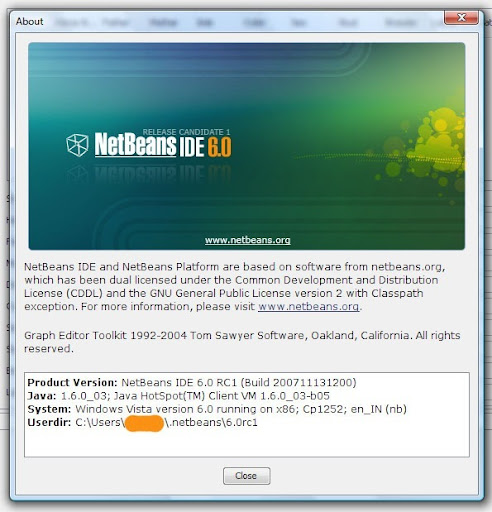
Download netBeans 6.0 RC1

netBeans.org has released the first Release Candidate to their servers. All the teams have said "Go" to the build 200711131200, which is the build for 13th Nov, 2007. Check the Go Status here.

Some ironing has been doing since they started working on the RC1. Some error windows have been hidden and a few P2 are yet to fixed and some errors yet to be found. Download the build and report some in-the-face bugs still present.

netBeansRC1

Download the RC1 release from here.

10 Reasons Why Android Will Be Successful

I was always skeptical about the Gphone. I thought the entire idea of Google making a phone seemed silly to me. Google being a software/web company making hardware seemed too big a step. There were obvious comparisons with the iPhone and I was one of the biggest critics of Gphone for my colleagues and friends.

But a few weeks back when I first saw Google's press release about the Android, I got a little more interested. But my doubts were still there... And on 12th Nov, when I downloaded the SDK and saw the presentation videos, I realized this is what programming on mobile phones will be in the near future. I try to present a developer perspective on why programming on Android will be successful. May be the handset manufacturers and operators would want to differ, but for the developers I think Google's done a great job.

1.) Free & Easy Access: Its "free" as in beer as well as "free" as in freedom. Operators and manufacturers will be able to customize and install for free. Thus, it'll be cheaper to build compared to say Windows Mobile, UIQ or Symbian. Also, Google/OHA intends to provide enough support for everyone which will be free or cheaper than anything else in the market.

2.) Promise of JavaME: If you downloaded the SDK, you know that its like JavaME and programmed on Eclipse. JavaME (earlier, J2ME) already has a huge developer base and the learning curve to develop applications for Android is going to be a small one. The porting of already developed application would be easy. You could add new functionality to old JavaME applications very easily.

3.) Good interfaces: The UI parts like Layouts, AdapterViews and using XML to design the UI, make Android what J2ME interfaces should always have been. Its more like J2MEPolish if you think of it as a developer. Something like Matisse (GUI Builder/ WYSIWYG Visual Designer) should have been done by Google for faster & easier GUI design... (I don't mean adding Swing, 'coz not every mobile device would be capable enough. Only a GUI builder).... 3D/2D with the openGL system is also easy to use. Its more like JSR239, so small learning curve again!

4.) Great apps: Being able to use Google's applications like Google maps, Gmail.... and WebKit (not Google's tech) within your application reduces a lot of effort for the developer and helps new innovative features. The use of the notification area across the platform is another exciting feature for developers. It feels like being able to use the system like Symbian development with Java...

5.) Linux based: Being Linux based is not new. Motorola among others already have a few Linux phones. But its worth mention because with Linux you know that there are fewer bugs as its been a few years that Linux is being used for mobiles. A lot of ironing as already been done, which means its stable than anything new Google would have developed.

6.) Hardware requirement: The hardware requirements with Android are not yet to be found. But the promise seems like it'll be available on most devices. If this turns out to be true then it means that our application is available to a larger audience. May be the Optional APIs like LBS (Location-based services), Media API, 3D and Low-level hardware access will be device specific, but other than that, it'll be probably common. For the developer it means you have to think less about which JSRs the device supports

7.) Eclipse & Developer love: Google's "Don't Do Evil" philosophy means that quite a lot of people love them including developers. Google's earlier tools like GWT, Google Gears are examples of excellent tools that developers love. The SDK is Eclipse and this means there are lot of developers who already know to use the IDE and platform.

8.) Publicity: As developers, the added advantage of developing for the Android is the publicity you may be able to get. Being the first apps to be built for Android, its obviously gonna catch the eye of a lot of other developers and consumers.

9.) Cash prize: Its part of publicity as well as getting rich. If money and fame are motivations for you as a developer, then Google has hit it right!

10.) Hype: Like they say, "Any kind of publicity is good publicity". Look at Apple's iPhone and you'll know that the hype created around it helped quite a lot of sales for the product. There so much hype around Android these days. Since Android/Gphones are already so much in the news, its pretty evident that

Tuesday, November 13, 2007

India's Tata Owns Asia's Fastest Supercomputer

Guest Blogger: Steven Parker
13th Nov, New York

I know a lot of the reader's at this blog are Indians and this one is for all the Indians to make you feel proud. Tata Group, which is India's popular conglomerate own the fastest supercomputer in Asia and the 4th fastest in the world. The supercomputer called "Eka" (One) is located at the Computational Research Laboratories (CRL) in Pune, a wholly owned subsidiary of Tata Sons.

The rankings were announced yesterday at the Supercomputing Conference held at Reno, NV. The list can be found here in all its glory. Its is the first time that a supercomputer from India has figured in the top 10 list of supercomputers. Eka is built by HP and uses Cluster Platform 3000 BL460c, Xeon 53xx 3GHz, Infiniband. It reaches a max of 117.9 TFlops and Rpeak of 170TFlops. It moved from its earlier ranking of 179 to rank 4, and is quite a big achievement. It cost the Tata's $30 million to build. Tata's announcement can be found here about the entire thing.

I do not agree with Sunny's view of using GPUs for supercomputing. The cost of the hardware would come down considerably, but the cost of software would be a lot higher considering the productivity of programming the GPU. Let's see how this one turns out!

Free Virtualization: VmWare Server 2.0 Beta

Guest Blogger: Steven Parker
13th Nov, New York

I have been a big fan of virtualization. Microsoft just yesterday announced that their Hyper-V server would be sold at $28 as an add-on to Windows Server 2008. This came as a surprise to me. Microsoft is entering into this market pretty late and with free alternatives from major players already existing, giving it free would have been the best strategy for widespread adoption. But may be Microsoft wouldn't be Microsoft if it started giving anything for free!!

VmWare which sells its flagship ESX-Server, also gives away free a smaller brother of ESX. They called it GSX and now its called VmWare Server. VmWare released just few hours ago, the VmWare Server 2.0 beta on their servers. This is downloadable for free and has lots of new features built into it.

What's New

New features and enhancements in the VMware Server Beta 1 release:

  • Web-based management interface: A new Web-based user interface provides a simple, flexible, intuitive and productive way for you to manage your virtual machines.
  • Expanded operating system support: VMware Server now supports Windows Vista Business Edition and Ultimate Edition (guest only), Windows Server 2008 (Longhorn Server Beta 3), Red Hat Enterprise Linux 5 and Ubuntu 7.1, among others.
  • Greater scalability: Take full advantage of high-end hardware with support for up to 8GB of RAM per virtual machine, up to two virtual SMP (vSMP) processors and up to 64 virtual machines per host.
  • 64-bit guest operating system support: Run high-performance operating systems in virtual machines with support for Intel EM64T VT-enabled processors and AMD64 processors with segmentation support.
  • Support for VIX API 1.2: This feature provides a programming interface for automating virtual machine and guest operations.
  • Support for Virtual Machine Interface (VMI): This feature enables transparent paravirtualization, in which a single binary version of the operating system can run either on native hardware or in paravirtualized mode.
  • Support for USB 2.0 devices: Transfer data at faster data rates from USB 2.0 devices.


I have just downloaded and installed Ubuntu on it. Doesn't seem like its running on a VM and is pretty stable being in beta. I have yet to play and tweak a few things, but the first impression is pretty neat!! I'm going to install Vista and try quick switching between them... If you want to play with it as well, then you can download it from here. Leave comments about your experience ==>

Microsoft branding: 8 Versions Of Windows Server 2008

Guest Blogger: Steven Parker
12th Nov, New York

Steve Jobs recently said at the launch of Leopard OSX, "And everyone gets the 'Ultimate' version", just to take a swing at the different versions of Vista. If that was not enough, Microsoft is prepared to give the world many more versions of its server operating system. Actually, when Windows Server 2008 will be released it'll come in 8 different flavors!!

Microsoft has figured it out that marketing different versions of the same thing is profitable. They understand that packaging stuff with different set of features makes people want more. Microsoft seems to understand that the entire culture of marketing now-a-days is about tempting the customer to buy the bigger box, more that what he actually requires!! ;-)

Windows Server 2008 is special because of its thin-hypervisor called Hyper-V, which enables virtualization out of the box! Windows Server 2008 will come in Standard, Enterprise and Datacenter versions with and without the Hyper-V. And each of these would come in 64-bit and 32-bit versions. CALs (Client-Access License) means the number of clients that are allowed to access the server.

Version Price CALs
Standard (with Hyper-V) $999 5
Standard (without Hyper-V) $971 5
Enterprise (with Hyper-V) $3999 25
Enterprise (without Hyper-V) $3971 25
Datacenter (with Hyper-V) $2999 per processor
Datacenter (without Hyper-V) $2971 per processor
Web Server 2008 (without Hyper-V) $469  
Server 2008 for Itanuim (without Hyper-V) $2999 per processor

The funny part of it is that "When Windows Server 2008 ships next February, those versions that have Hyper-V will include the beta bits for that, and those will be updated to the final version when that ships within 180 days". This means that you'll may for a beta product initially. When Microsoft releases the final product, which will be a standalone, you get the final as well...

Let's see how it all looks when Microsoft will release the product in all its glory in Feb 2008. I have heard good things about it from Sunny, who's been beta testing the Home Server and Server 2008 from it's early days. I seriously expected Vista to come with 32-bit and 64-bit versions on the same DVD, but that was not the case. Hope they have that for Windows Server atleast!

Monday, November 12, 2007

Intel Releases Peryn To Make Life Tougher For AMD

Guest Blogger: Steven Parker
12th Nov, New York

Its been tough time for AMD already, since Core2 Duo was launched. Intel then stuck two of these together and created Quad Cores. These Quad Cores have  been selling like hot cakes, and Intel's making lots of profit. Intel today released its 45nm Peryn processors which are hdr-txt-logosmaller in size and cheaper for Intel to manufacture. This means Intel can earn bigger margins on the same quad core processors. On the other hand, when AMD releases the Phenom its margins will go down because of the large size and competitive pricing as Sunny observed here...

The Intel Peryn is basically the same quad-core but built using a completing new process as well as substrate and gate transistors. Intel manufactures the Peryn using Hafnium-Based High-k Metal Gate Transistors, which seems to be reduce current leakages through gates. Infact, Intel's founder Gordon Moore called the technology "the biggest transistor advancements in 40 years". This technology would allow Intel to make faster processors in the short-term.

From Intel: (click here to read the press released)

New to the Intel line-up of server processors are 15 server dual-core and quad-core 45nm Hi-k Intel Xeon processors. The 12 new quad-core chips boast clock speeds ranging from 2GHz up to 3.20GHz, with front side bus speeds (FSB) up to 1600MHz, and cache sizes of 12MB. The three new dual-core chips feature clock speeds of up to 3.40GHz, an FSB of up to 1600MHz, and cache sizes of 6MB.

The 45nm Hi-k Intel Xeon processors are compatible with server platforms using the Intel® 5000 chipset family. In addition, Intel is launching three platform solutions to support 45nm processors, including:
   The Intel® 5400 chipset-based platform (previously codenamed "Stoakley") that is optimized for high-bandwidth applications such as high-performance computing (HPC).
   The Intel 5100 Memory Controller Hub chipset and Intel ICH-9R I/O controller (previously codenamed "Cranberry Lake"). These are cost-optimized solutions that support either one or two processors and also provide reduced power consumption using native DDR2 memory.
   The Intel 3200 chipset-based platform (previously codenamed "Garlow") that is specifically designed for single-processor entry servers.

Sunday, November 11, 2007

Crysis Leaked!! Tread With Caution

The word has spread like wild fire on the internet that the highly anticipated game, Crysis has been leaked on to the torrent sites. Crysis is probably "the game"crysis_overview to be played this year and everyone have been sitting waiting for the game. And finally when there was only a week left, some notorious guys have leaked it off to the internet. This is really bad news for EA, since people who even had intentions to buy the original, won't be able to hold their patience anymore and download the game.

But I would suggest some caution to all the super-excited gamers, not to download any torrent with the alphabets C, R, Y, S, I, S. They should probably look at comments and also think if its the final version or some lame beta/alpha testers had received. And if EA has the final version, they should package it quickly, work night-out and send it to the shops by tomorrow. That would mean, the people who don't want to download 6GB, would go to the shops and get it first!!

Also, with the cracks not out yet, you never know who bundles the Trojan or Virus with the crack. Why do you as gamers expect the malicious crackers to crack his head without cracking your computer first!!?? So, don't rush mate.. Take your time and get the real package on the shelves... I mean who wouldn't want the manual for this all-time collectible ;-)

Update (18:00hrs GMT): Since, I talked about Dx10, the screenshots here are some food for thought comparing Dx10 Vs Dx9... I'm wondering if I like the Dx9 output??

Saturday, November 10, 2007

Indiatimes.com infecting computers

Update (13th Nov): Indiatimes.com cleaned the stuff. The announcement is here

The ScanSafe Blog mentions that the popular Indian website, Indiatimes.com has pages that are installing malicious code into computers that are visiting its webpages.

From the ScanSafe Blog:

The installed malware included a cocktail of downloader and dropper Trojans, assorted other malicious binaries, and large amounts of scripts, cookies, and other non-binaries. We ran some of the binaries through VirusTotal and looks like overall detection among signature-based antivirus vendors is low. Given the nature of the downloaded files, it appears the malware may be intended to create sites used to attack others or that there may be some malicious peer-to-peer or other filesharing/communication purpose.

There is no clear indication on which pages have been affected, but they say not every page is infected. The attack is basically done using some unknown vulnerability in windows. Microsoft has been asked to look into the report and is yet to give any reaction. Also, which browsers are affected have not been listed, but it seems like IE should be affected since some binaries are installed and activeX seems to be the common way to do it. But other scripts may also be working. ScanSafe advises all the users not to visit the webpage until a fix announcement is made by Indiatimes.com.

All this malicious activity is going unnoticed because a lot of antiviruses are unable to detect the signatures of the malicious code. Which means that many of you already have been infected if you visited Indiatimes.com recently.